Expatriating to Malaysia: complete guide 2026 (visa, cost, health)
Everything you need to know to expatriate to Malaysia: MM2H and Employment Pass visas, cost of living, health, and cities to settle in. A practical guide for French nationals.
Free review, with no obligation. Response within 24 hours.
Unsure which benefits you need? The Diagnostic is optional.
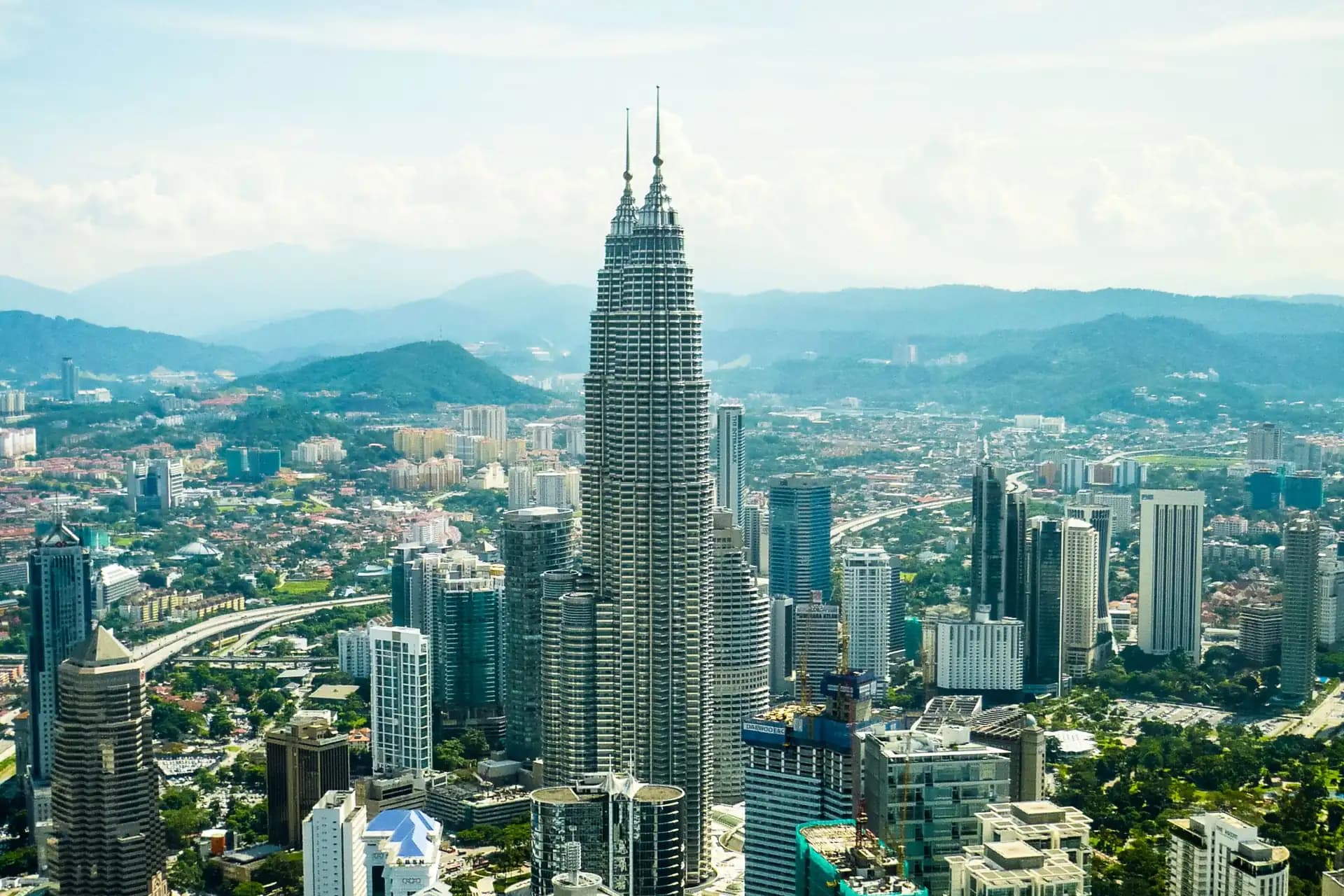
Tropical climate, attractive cost of living, modern infrastructure and a dynamic expatriate community: Malaysia attracts thousands of French people every year in search of a new life. But expatriating to Malaysia cannot be improvised. Between visa procedures, choosing a city, the health system and realities on the ground, good preparation makes all the difference.
This guide supports you step-by-step: formalities, budget, employment, health and insurance. Everything you need to know before packing your bags.
Why expatriate to Malaysia? The country’s assets
Malaysia is not an expatriation destination by chance. It combines several rare advantages in the region.
What attracts French expatriates:
- Moderate cost of living: 40 to 50% cheaper than in France for an equivalent standard of living
- English widely spoken: the language barrier is low
- Quality infrastructure: roads, internet, private hospitals to international standards
- Geographic position: hub to Singapore, Thailand, Indonesia and Australia
- Cultural diversity: a blend of Malay, Chinese and Indian influences reflected in the cuisine, festivals and daily life
- Stable climate: heat all year round (27-33°C), no typhoons
💡 The Izem Expat tip
Malaysia is particularly well-suited to families and retirees thanks to its MM2H program and its quality international schools. For working professionals, Kuala Lumpur offers a dynamic job market in tech and finance.
Geography and climate: what you need to know before leaving
Malaysia is divided into two distinct regions separated by the South China Sea:
- Peninsular Malaysia: where Kuala Lumpur, Penang and Johor Bahru are located
- East Malaysia: the states of Sabah and Sarawak on the island of Borneo
The tropical climate
Hot temperatures all year round (27 to 33°C) and high humidity (70-90%). The country experiences two monsoon seasons:
| Region | Main monsoon | Period |
|---|---|---|
| East Coast (peninsula) | North-east monsoon | November – March |
| West Coast (KL, Penang) | South-west monsoon | May – September |
| Sabah / Sarawak | Variable | October – February |
To anticipate: intense but generally short tropical rains (late afternoon). No "cold" season, plan for light clothing and an umbrella.
Languages, culture and religion: adapting to local life
The language question
Good news: English is widely used in Malaysia. It is the language of business, administration and daily life in large cities. Malay (Bahasa Malaysia) remains the official language, but you can live comfortably without mastering it.
In Chinese communities, Mandarin and dialects (Cantonese, Hokkien) are common. Tourist and expat-friendly areas are completely English-speaking.
Religious and cultural diversity
Malaysia is officially a Muslim country, but the society is multicultural:
- Malay (60-65%): predominantly Muslim
- Chinese (20-25%): Buddhist, Taoist, Christian
- Indian (7-8%): Hindu, Muslim, Christian
- Others: indigenous communities in Borneo
What this implies on a daily basis:
- Ramadan observed (restaurant opening hours adapted, quieter atmosphere)
- Alcohol available but regulated (supermarkets, bars, non-Muslim zones)
- Dress code: freedom in big cities, more discretion in rural or religious areas
- Many public holidays (Muslim, Chinese, Hindu, Christian festivals)
💡 The Izem Expat tip
Malaysia is tolerant but conservative on certain subjects. Avoid political or religious discussions with strangers. When in doubt, observe and adapt to local customs.
Visas: which option for expatriating to Malaysia?
The choice of visa depends on your situation: employee, entrepreneur, retiree or digital nomad.
Comparison table of the main visas
| Visa | Target audience | Duration | Main conditions |
|---|---|---|---|
| Employment Pass (EP) | Qualified employees | 1-5 years (renewable) | Contract with a Malaysian company, min. salary ~5,000 MYR/month |
| Dependant Pass | Spouse/children of an EP holder | Linked to the EP | Sponsorship by the main holder |
| MM2H (Malaysia My Second Home) | Retirees, annuitants | 5-15 years | Bank deposit + passive income (criteria raised in 2024) |
| DE Rantau (Nomad Pass) | Freelancers, digital nomads | 1 year (renewable) | Min. income 24,000 USD/year, mandatory health insurance |
Focus on the MM2H
The Malaysia My Second Home program was tightened in 2024. The new conditions:
- Fixed deposit: 500,000 MYR minimum (~€100,000) in a Malaysian account
- Proven monthly income: 40,000 MYR/month (~€8,000) for the "Platinum" category
- Categories: Gold, Platinum, with differentiated benefits
This visa remains attractive for wealthy retirees or investors, but the financial criteria now exclude many profiles.
Focus on the DE Rantau (Digital Nomad)
Launched in 2022, this visa targets self-employed workers and freelancers:
- Minimum annual income: 24,000 USD (~€22,000)
- Validity: 12 months, renewable
- Mandatory international health insurance
- Possibility to include spouse and children
💡 The Izem Expat tip
The DE Rantau requires health insurance covering Malaysia. We offer contracts that meet visa requirements, with hospitalization and repatriation coverage included. Remember to subscribe before your visa application.
Working in Malaysia: job market and high-growth sectors
Sectors that hire expatriates
Malaysia attracts foreign talent in several fields:
- Tech and IT: Kuala Lumpur is positioning itself as a regional hub (development, cybersecurity, data)
- Finance and banking: presence of large international banks
- Industry and manufacturing: electronics, automotive, petrochemicals
- Shared services: many multinationals have their regional centers in KL
- Education: international schools and universities recruit foreign teachers
Finding a job from France
- JobStreet and LinkedIn: main platforms
- Networking: the French community in Malaysia is active (CCIFM, associations)
- Direct application: large companies (Petronas, Maybank, multinationals) publish on their sites
Indicative salaries (qualified positions):
| Position | Gross monthly salary (MYR) | EUR equivalent |
|---|---|---|
| Junior Engineer | 4,000 – 6,000 | 800 – 1,200 € |
| Middle Manager | 8,000 – 15,000 | 1,600 – 3,000 € |
| Director / Senior | 20,000 – 40,000+ | 4,000 – 8,000 €+ |
Salaries are lower than in France, but the cost of living largely compensates.
Cost of living: what budget for expatriating to Malaysia?
Estimated monthly budget by profile
| Profile | City | Monthly budget (EUR) |
|---|---|---|
| Single, local life | Penang, Johor Bahru | 1,200 – 1,500 € |
| Single, comfortable life | Kuala Lumpur | 1,800 – 2,200 € |
| Couple without children | Kuala Lumpur | 2,500 – 3,500 € |
| Family with 2 children (international school) | Kuala Lumpur | 5,000 – 8,000 € |
Main expenses
Housing:
- KL city center studio: 2,000 – 3,500 MYR/month (400 – 700 €)
- 3-bedroom apartment (expat area): 4,000 – 8,000 MYR/month (800 – 1,600 €)
- House with garden (suburbs): 5,000 – 12,000 MYR/month (1,000 – 2,400 €)
Food:
- Local meal (hawker center): 10 – 20 MYR (2 – 4 €)
- Western restaurant: 50 – 150 MYR (10 – 30 €)
- Supermarket shopping (Western): +30% vs local products
Transport:
- Grab (Uber equivalent): very affordable
- Petrol: ~2.50 MYR/litre (~0.50 €)
- No extensive metro except in KL, having a car remains practical
Schooling (critical point for families):
| School type | Annual fees (MYR) | EUR equivalent |
|---|---|---|
| Malaysian public school | Almost free | , |
| Local private school | 15,000 – 40,000 | 3,000 – 8,000 € |
| International school (British, French) | 50,000 – 120,000 | 10,000 – 24,000 € |
💡 The Izem Expat tip
School fees often represent the primary expense for expatriate families. Integrate this budget from the start of your financial planning, and check if your employer offers partial coverage.
Health in Malaysia: why private insurance is essential
The Malaysian health system
Malaysia has a dual system:
| Criterion | Public hospitals | Private hospitals |
|---|---|---|
| Cost | Very low (subsidized) | High (market rates) |
| Access for expats | Limited (priority to residents) | Open to all |
| Waiting times | Long | Short or non-existent |
| Quality of care | Variable by establishment | International standards |
| Language | Malay mainly | Fluent English |
Clear conclusion: expatriates use the private sector almost exclusively. Hospitals like Gleneagles, Pantai, Prince Court or Sunway Medical offer international-level care, but the bills follow.
Examples of medical costs (private sector)
| Treatment | Indicative cost (MYR) | EUR equivalent |
|---|---|---|
| GP consultation | 80 – 150 | 16 – 30 € |
| Specialist consultation | 150 – 400 | 30 – 80 € |
| Hospitalization (per day) | 800 – 2,500 | 160 – 500 € |
| Childbirth (natural) | 8,000 – 15,000 | 1,600 – 3,000 € |
| Caesarean section | 15,000 – 25,000 | 3,000 – 5,000 € |
| MRI | 1,500 – 3,000 | 300 – 600 € |
Health insurance: mandatory or essential?
For DE Rantau visa holders: international health insurance is mandatory to obtain the visa.
For other visas: no legal obligation, but essential in practice. Without insurance, a few days of hospitalization can cost several thousand euros.
What your insurance must cover:
- Hospitalization in a private facility (without restrictive ceilings)
- Consultations and outpatient care
- Medical evacuation and repatriation to France
- Maternity (if a family project)
- Coverage during travel outside Malaysia
💡 The Izem Expat tip
Local Malaysian insurance plans exist but have limitations: closed networks, low ceilings, no coverage outside the country. International health insurance guarantees you freedom of choice and comprehensive protection, in Malaysia as well as when you return to France.
Recommended vaccinations
No vaccine is mandatory to enter Malaysia, but several are recommended:
- Hepatitis A and B
- Typhoid
- Japanese encephalitis (if staying long-term in a rural area)
- Rabies (if contact with animals is probable)
- DTP update (diphtheria, tetanus, polio)
Consult an international vaccination center before your departure.
Where to settle? The best cities to expatriate to in Malaysia
Kuala Lumpur: the obvious choice
For whom? Professionals, families, entrepreneurs
The capital concentrates everything: jobs, international schools, cultural life, structured expat community. Popular neighborhoods: Mont Kiara, Bangsar, KLCC, Damansara Heights.
Pros: professional opportunities, infrastructure, nightlife
Cons: dense traffic, urban heat, higher rents
Penang: charm and quality of life
For whom? Retirees, digital nomads, families looking for a quieter pace
The island of Penang (and its capital George Town) offers a pleasant living environment, an exceptional culinary scene and a strong international community. Fewer job opportunities than in KL.
Pros: lower cost of living, cultural heritage, accessible beaches
Cons: limited job market, fewer French schools
Johor Bahru: at the gates of Singapore
For whom? Cross-border workers in Singapore, families looking for a cost/quality compromise
30 minutes from Singapore via the causeway, JB allows you to enjoy Singaporean salaries with a Malaysian cost of living. Beware of border traffic jams.
Pros: proximity to Singapore, international schools, affordable real estate
Cons: less charming city, dependence on border crossing
Sabah and Sarawak: adventure in Borneo
For whom? Nature lovers, adventurous retirees, specific profiles (oil, biodiversity)
The two states of East Malaysia offer a radically different experience: tropical forests, unique wildlife, very low cost of living. But the isolation is real and infrastructure is less developed.
Pros: exceptional nature, authenticity, low budget
Cons: remoteness, fewer international schools, limited health access
Checklist: the steps to expatriate to Malaysia
☐ 6-12 months before departure
- Define your project (job, retirement, entrepreneurship)
- Identify the appropriate visa for your situation
- Estimate your realistic budget (housing, school, health)
- Take out international health insurance
☐ 3-6 months before
- Start visa procedures
- Search for housing (remotely or via a scouting trip)
- Enroll children in a school
- Make an appointment for vaccinations
☐ 1-3 months before
- Organize the move
- Open a Malaysian bank account (possible remotely for some banks)
- Prepare administrative documents (apostilles, translations)
- Cancel or pause your French contracts
☐ On arrival
- Finalize visa formalities (biometrics, etc.)
- Activate your local phone line
- Register at the French Consulate
- Locate hospitals and clinics in your neighborhood
Expatriating to Malaysia means choosing a welcoming, affordable country that is well-connected to the rest of Asia. But like any expatriation, success depends on your preparation.
Visa, budget, children's school, housing, every element counts. And health coverage must not be the poor relation of your project. In Malaysia, the private system is excellent but expensive. Without suitable insurance, a health issue can quickly become a financial pit.
Are you preparing your move to Malaysia? At Izem Expat, we support French people in choosing their international health insurance. Hospitalization coverage, repatriation, DE Rantau visa compliance: we find the solution adapted to your situation.